
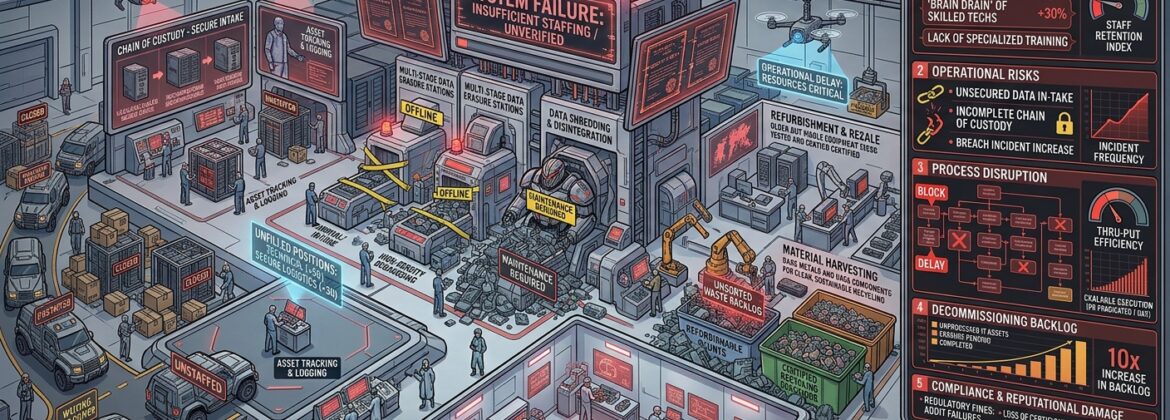
Behind the Scenes: The Workforce Crisis in E-Waste Recycling
Category: Social Impact & Sustainability | Read Time: 10 minutes
Executive Summary
E-waste recycling involves significant manual labor. Yet the industry faces chronic workforce shortages, poor working conditions, and inadequate safety standards in many facilities. When you choose an ITAD provider, you’re also making a choice about labor practices. Certified providers matter.
The Global E-Waste Workforce Crisis
E-waste recycling is labor-intensive. Globally, millions of workers manually disassemble, sort, and recover materials from electronic waste. But the industry faces serious challenges:
Inadequate workplace safety standards in many recycling facilities
Exposure to hazardous materials (lead, mercury, cadmium) without proper protection
Wage suppression and exploitative labor practices
Child labor in some informal recycling operations
Occupational health crises: respiratory disease, skin conditions, neurological damage
Geographic concentration in developing nations with weak labor protections
When you partner with uncertified recyclers to save money, you’re often outsourcing labor exploitation.
R2v3 Certification & Labor Standards
R2v3 certification requires certified facilities like CSC to maintain strict labor standards:
Worker safety protocols and personal protective equipment
Occupational health monitoring and medical screening
Fair wages and working conditions
No child labor or forced labor
Regular safety audits and independent verification
Worker training on hazardous materials handling
R2v3 facilities like CSC operate transparently. You can verify the labor practices associated with your ITAD.
The Business Case for Ethical ITAD
Here’s something that resonates with ESG-conscious enterprises: ethical ITAD practices strengthen your ESG story. You can communicate:
Documented worker safety and welfare in your supply chain
Fair labor practices in materials recovery
Zero tolerance for child labor in your ITAD vendors
Regular third-party audits of labor compliance
Positive social impact from responsible electronics recycling
For investors and stakeholders focused on the “S” in ESG, this matters deeply.
The Hidden Cost of Cutting Corners
Choosing uncertified recyclers to save money creates hidden risks:
Labor violations exposure: your company can face liability for supply chain labor abuses
ESG scoring penalties: rating agencies now evaluate vendor labor practices
Reputational damage if labor violations are exposed
Potential regulatory investigation if ITAD vendor violations are discovered
Investor pressure: socially conscious funds may divest or pressure on governance
The cost savings evaporate quickly when labor violations surface.
Communicating Your Commitment
Leading enterprises now highlight their ethical ITAD practices in ESG reporting and external communications. You can communicate:
Partnership with R2v3-certified ITAD providers
Documentation of labor standards verification
Worker safety audit results
Impact metrics from ethical recycling practices
Commitment to responsible e-waste management across your supply chain
It’s not just risk mitigation—it’s a differentiator for talent recruitment, investor confidence, and customer trust.

Leave a Comment